City of the week :
tampere, finland
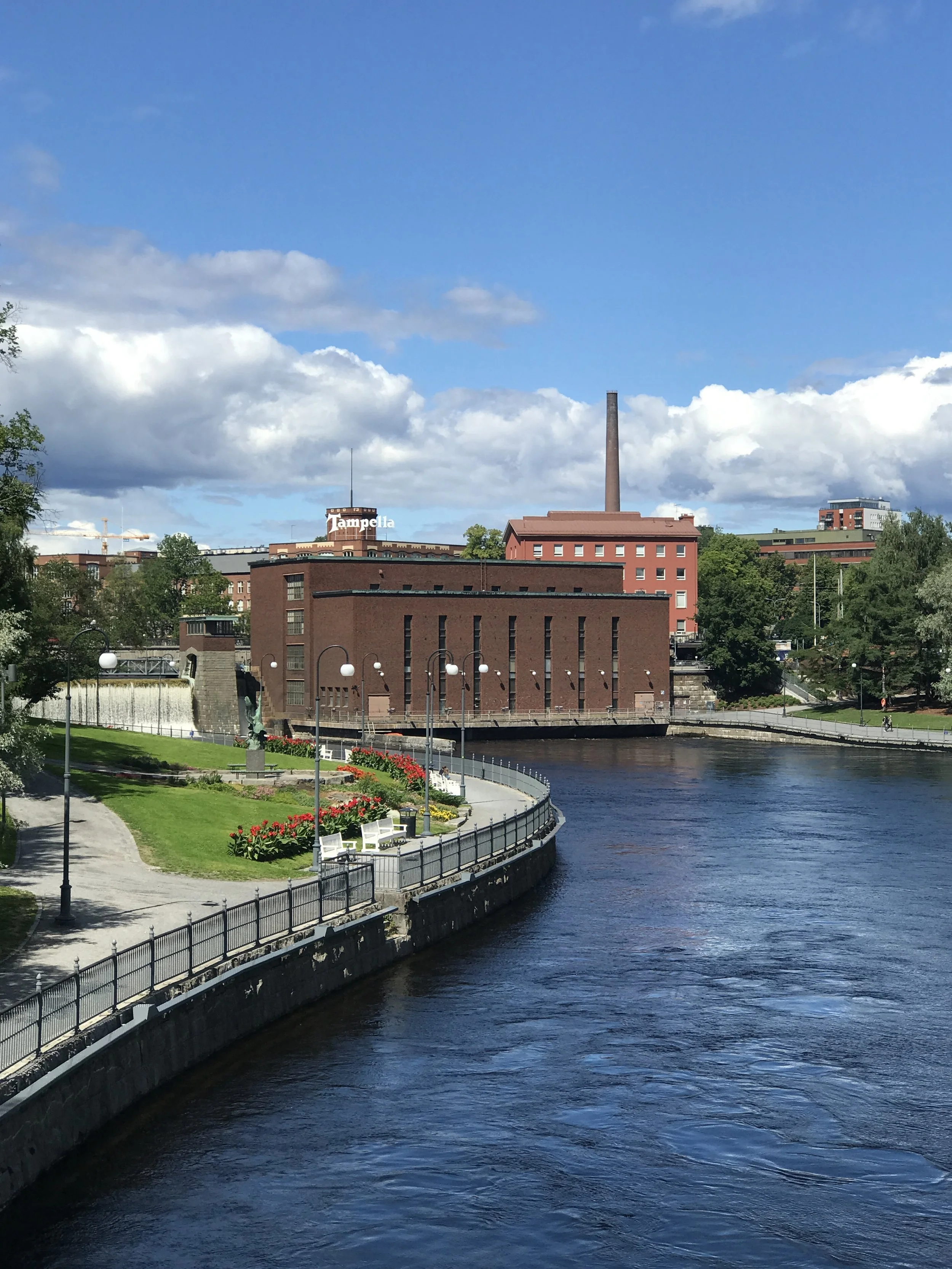
This week’s City Spotlight carries us to Tampere, Finland, where two lakes meet, the Tammerkoski rapids rush through the heart of the city, and nearly 250 years of history continue flowing alongside them. Long before Tampere became known for rock music, world-class saunas, or technological innovation, the rushing water between lake Nasijarvi and Lake Pyhajarvi provided the power that made it possible for a city to grow here at all. Founded by King Gustav III of Sweden in 1779, Tampere began as a modest market town before entering a new era under Russian Rule. In 1821, Tsar Alexander I granted the city duty-free status, opening the door for industry that would forever transform its future.
Everything changed when Scottish industrialist James Finlayson established his cotton mill along the banks of the Tammerkoski rapids. Soon, towering red-brick factories lined the rapids, earning Tampere the nickname “The Manchester of Finland.” The city became home to Finland’s first modern factory building, introduced the country’s first paper machine, and in 1882 became the first place in the Nordic countries illuminated by electric light inside Finlayson’s weaving hall. By the close of the nineteenth century, nearly half of Finland’s industrial workforce called Tampere home, making it one of the country’s most important manufacturing centers.
Industry brought opportunity, but it also strengthened the city’s character. Workers from across Finland settled here, creating a proud blue-collar identity built on resilience and perseverance. During the Finnish Civil War in 1918, Tampere became the principal stronghold of the Red forces and the site of the largest battle ever fought in the Nordic countries. The conflict left lasting scars, but the city continued moving forward. After the Second World War, manufacturing expanded into engineering before Tampere embraced a new era of education, research, and technology. Companies like Nokia helped transform the region into one of Finland’s leading centers for innovation proving the city could evolve without abandoning the foundations that first made it successful. Rather than replacing its past, it built upon it.
Across the city, former mills, warehouses, and industrial buildings remain part of everyday life. The Finlayson district now welcomes visitors with restaurants, breweries, museums, galleries, boutiques, and creative spaces where factory machines once echoed through brick walls. Tullikamari transformed a historic customs house into one of Finland’s premier live music venues, while Tampereen Tavara-asema gave new life to a former railway freight station as a modern concert hall. The buildings never stopped bringing people together. They simply found a new purpose.
It seems only natural that a city built by workers would eventually become one of Finland’s defining music cities. Tampere gave rise to Manserock, helping establish Finnish rock through artists like Juice Leskinen, Popeda, and Eppu Normaali before its scene expanded to embrace punk, hardcore, psychobilly, indie rock, and heavy metal. Today, venues like Vastavirta-Klubi, Olympia-kortteli, G Livelab continue filling those historic spaces with live music, ensuring that buildings once powered by industry are now powered by creativity.
That same balance between tradition and progress can be found throughout the city. Tampere proudly carries the title of the Sauna Capital of the World, where historic bathhouses like Rajaportti Sauna share the city with modern lakeside destinations like Kuuma. One is quiet. One is loud. Steam rises from century-old saunas while music pours from historic venues just a few streets away. Visitors can spend the afternoon exploring the world’s only Moomin Museum, climb the Pyynikki Observation Tower, cheer on Finland’s beloved ice hockey teams at Nokia Arena, or experience festivals like Tammerfest, SaariHelvetti, Puntala Rock, and Ankea, all while surrounded by the forests and lakes that have defined Tampere since the beginning.
While many cities reinvent themselves by replacing what came before, Tampere has spent nearly two and a half centuries building upon that history. That is what makes Tampere a fitting home for De La Rocka. As a musician, promoter, organizer, and one of the driving forces behind Finland’s psychobilly scene, he has dedicated himself to strengthening the culture around the music as much as the music itself. The Tammerkoski rapids still flow today just as they did when the first mills rose along their banks and when those same historic buildings later found new life through music. Each generation continues to find new purpose in the foundations left by the last. It is that spirit that makes Tampere — a city worth spotlighting — and always worth watching.